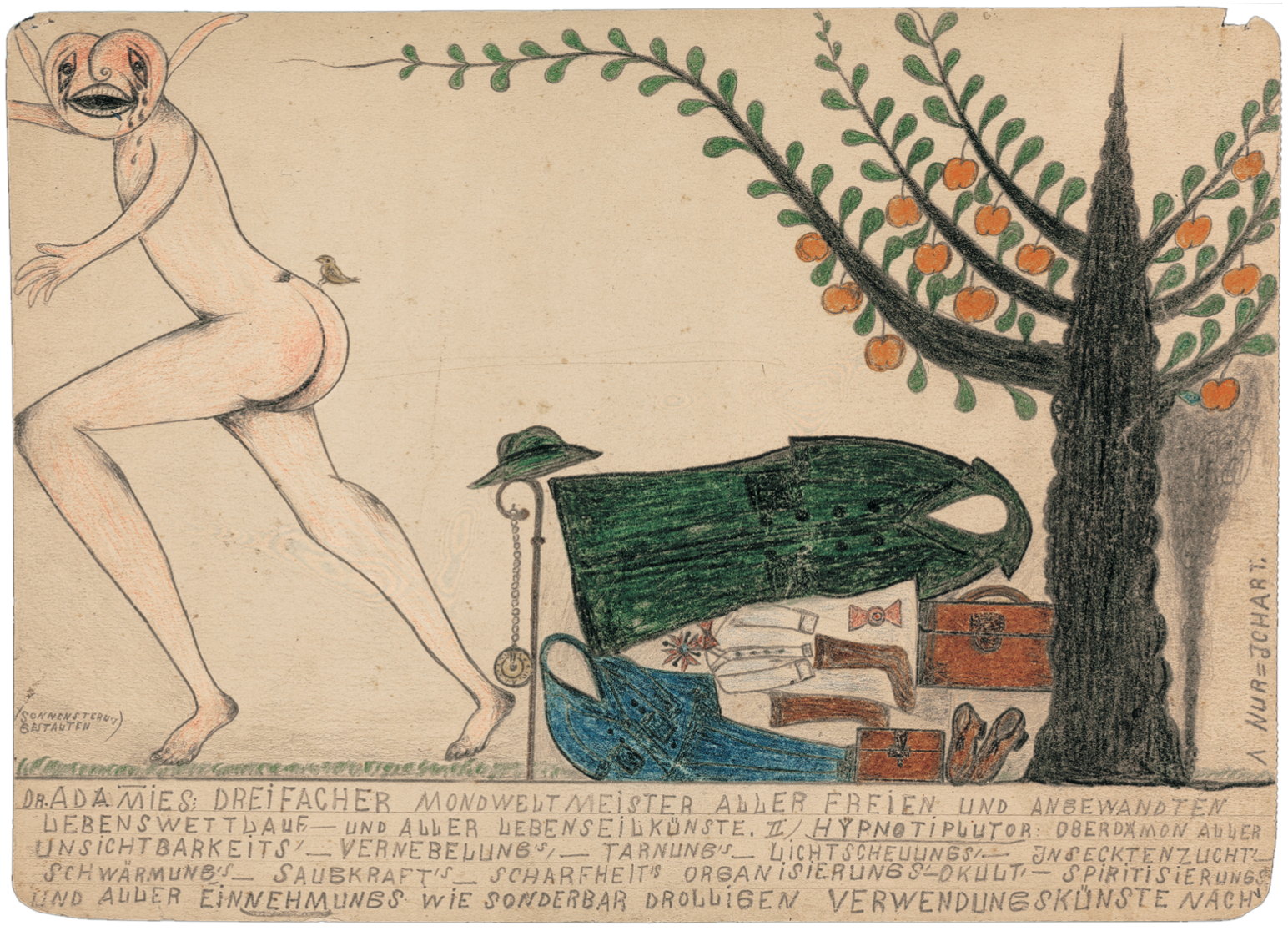
SPUCKELORE!
Claire Chambless, Friedrich Schröder-Sonnenstern, Nora Sturges
January 16 – February 14, 2026
Opening reception: Friday, January 16, 6–8pm
“Spuckelore" is a word that doesn’t quite behave. Pulled from the writings of Friedrich Schröder-Sonnenstern, it sounds like a spell, a cough, a ghost story told badly on purpose. Spuck carries the taste of spit and sputter, something bodily and half-haunting; -lore doesn’t point to tidy folklore so much as to a crooked system, a made-up doctrine, a private language pretending to be knowledge. Together they conjure something playful and unsettling—language slipping, meaning leaking, fantasy made bodily.
Spuckleore! brings together three artists whose work traces the unstable boundary between inner life and outer form—where psychic systems, architectural structures, and perceptual worlds begin to blur.
Friedrich Schröder-Sonnenstern’s mid-century colored-pencil drawings form a fevered visual cosmology in which image and language are inseparable. His hybrid figures—erotic, monstrous, tender, and grotesque all at once—sprout organs, eyes, fangs, and symbolic markings according to a logic that feels both obsessive and strangely scientific. Beneath the subjects, blocks of handwritten text unfurl like captions, spells, or case studies, describing the scenes in a language that drifts between sense and invention. Titles and proclamations read like fragments of a private encyclopedia, announcing archdemons, occult champions, hypnotic powers, and moon-dwelling souls with earnest authority. These are not simply illustrations but exposed mental architectures: private mythologies laid out as if they were technical diagrams, where fantasy, belief, and desire organize themselves into a coherent—if delirious—system.
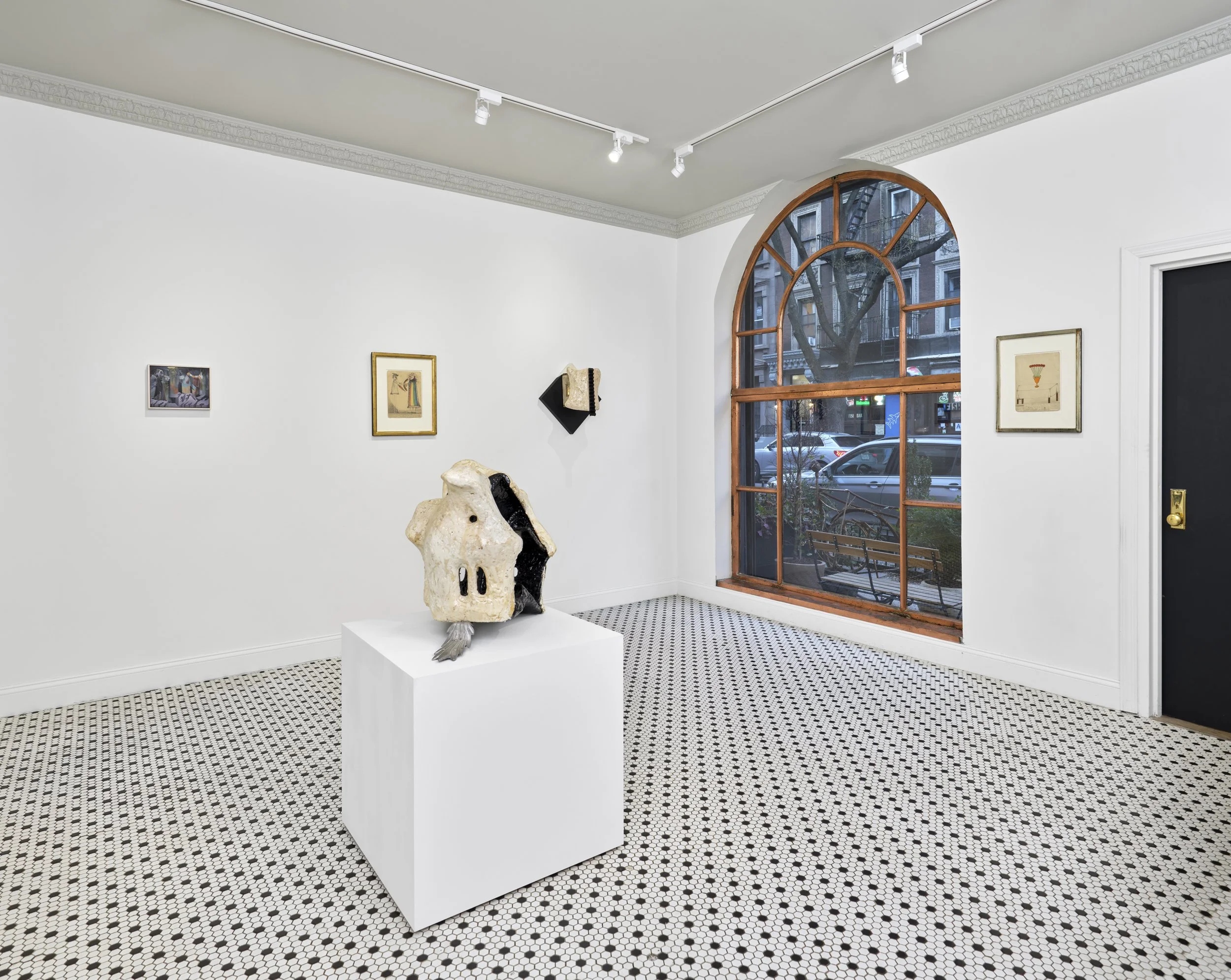
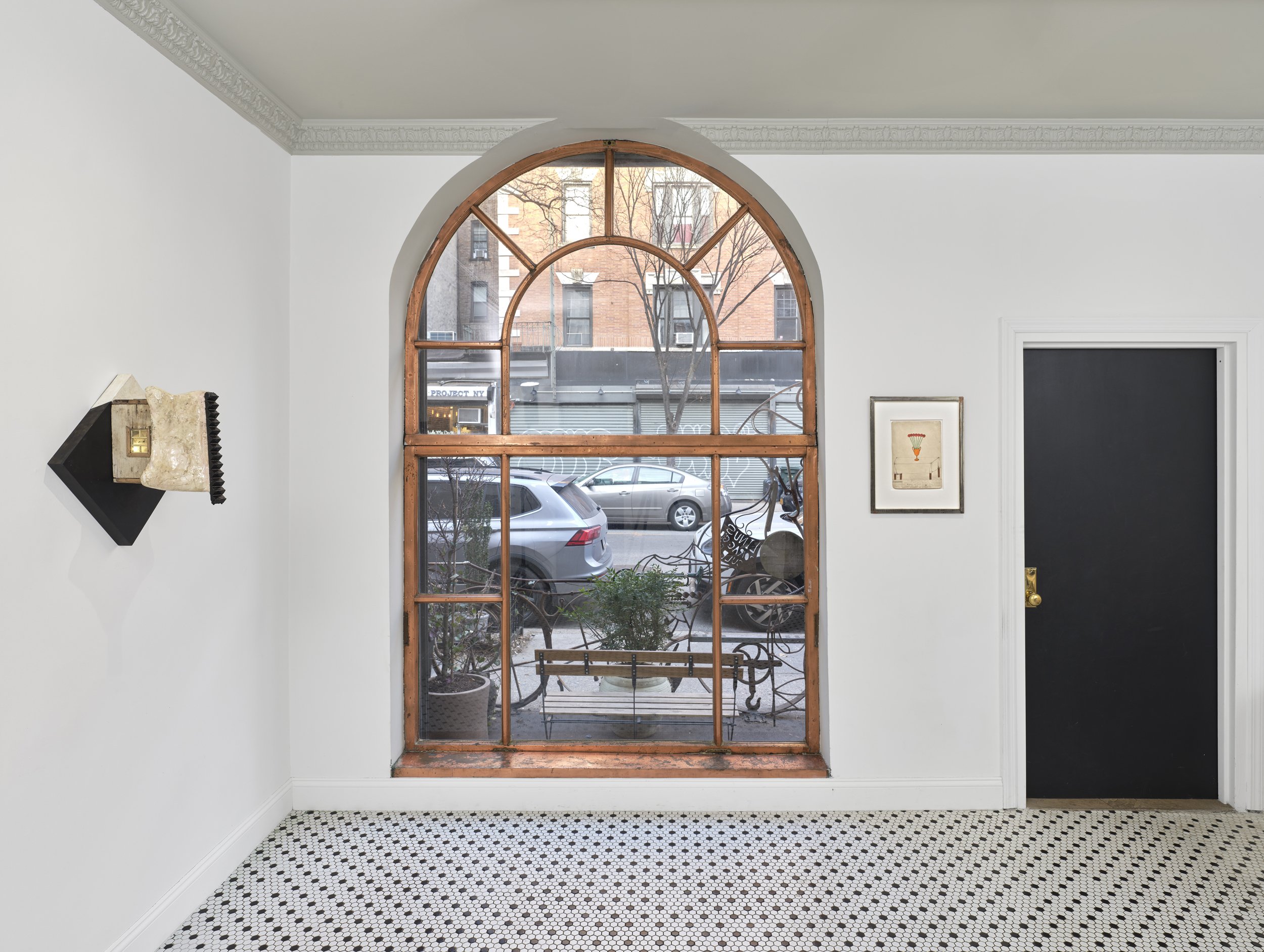
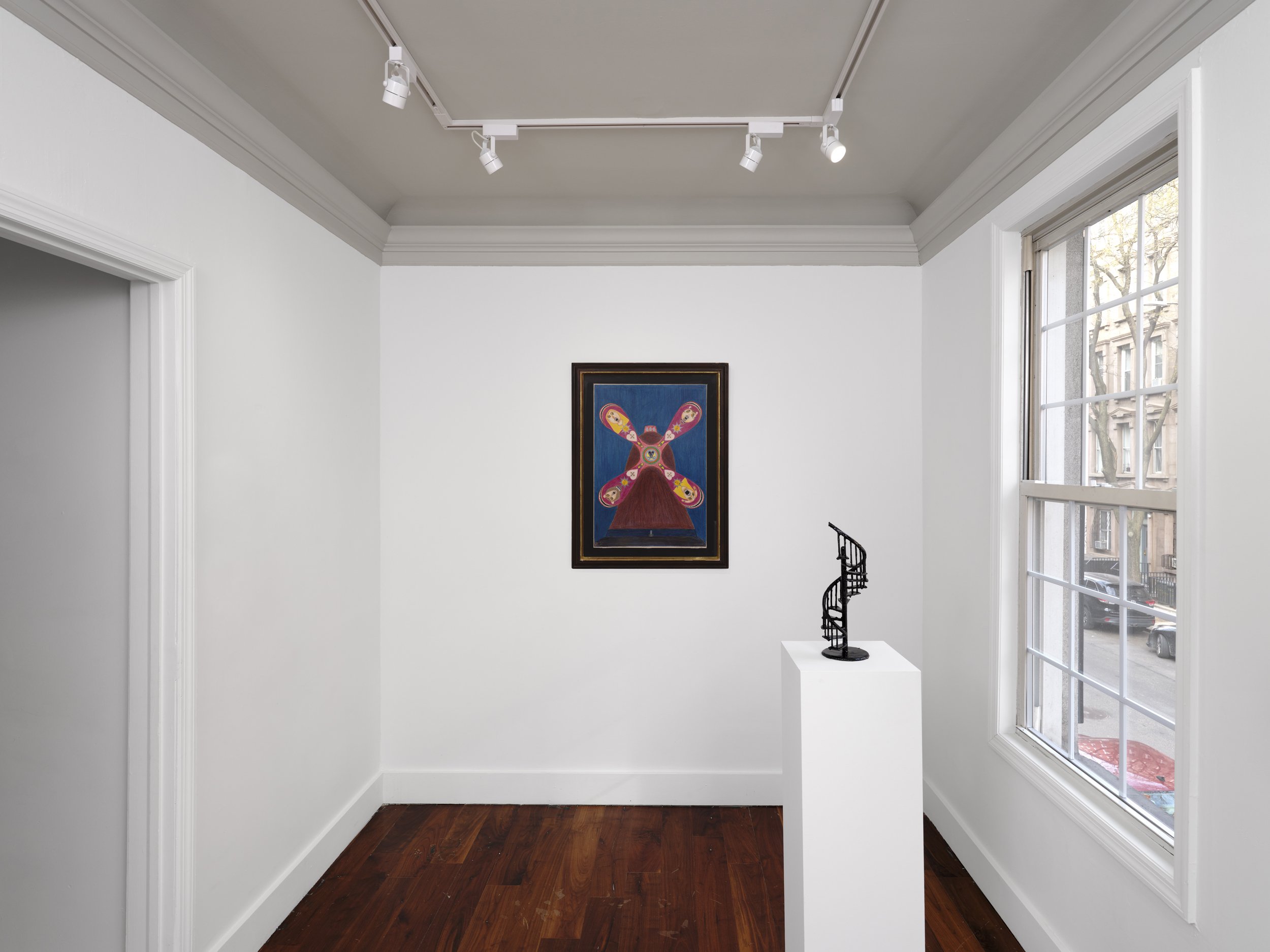
Claire Chambless’s sculptural works echo this sense of interiority turned outward. Her practice uses architecture—particularly the dollhouse—as a psychological device rather than a nostalgic one. In Spuckelore!, a miniature spiral staircase mirrors the gallery’s own, folding the exhibition back in on itself and collapsing the boundary between model and lived space. Several house sculptures appear excavated, as if carved from bone, ivory, or some fossilized interior—structures that feel hollowed out, anatomical, and strangely alive.
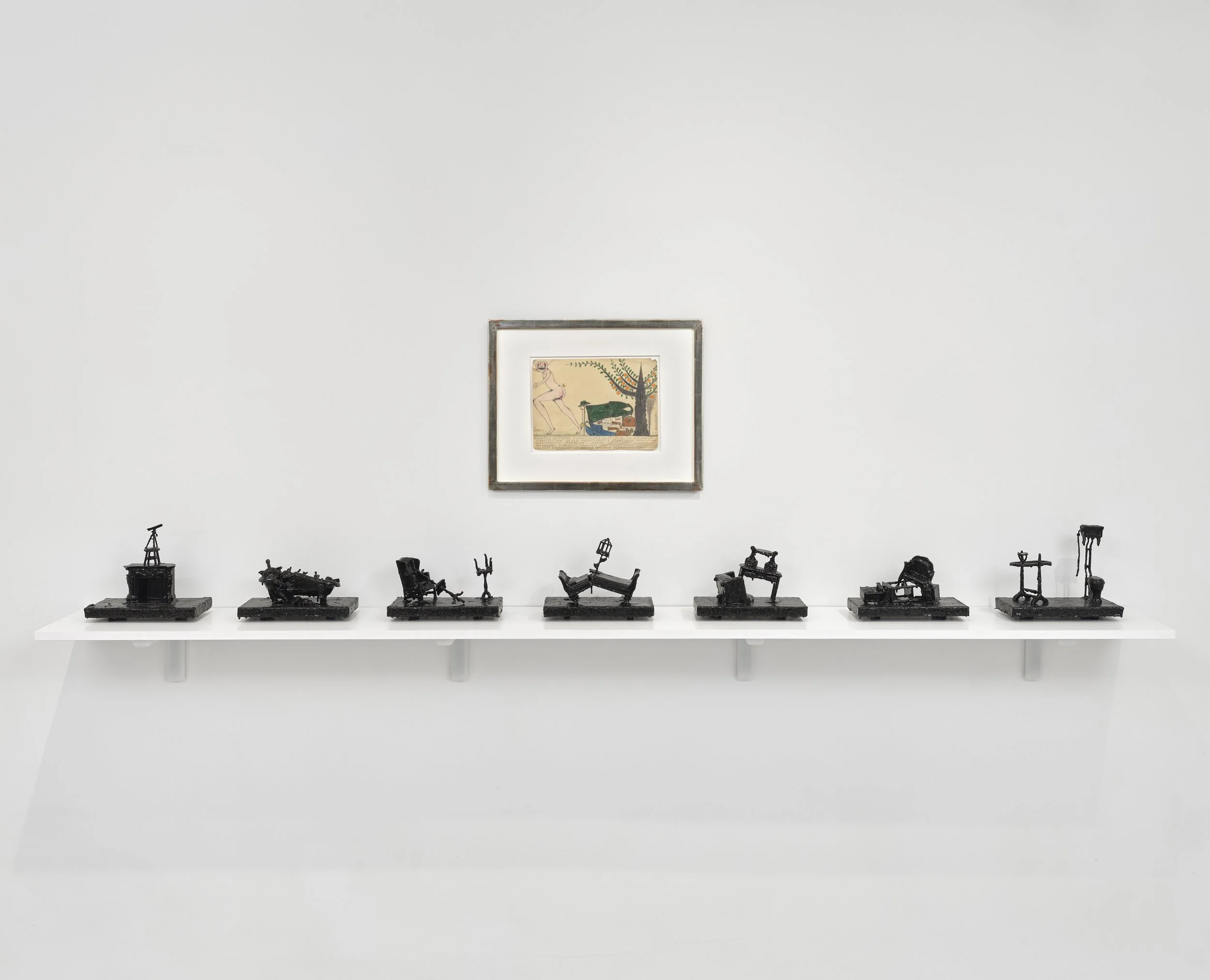
Chambless’s Seven Deadly Sins unfolds as seven individual sculptures, each coated in glossy black latex. In these works, fragments of furniture are stacked, broken, and reassembled into precarious moral tableaus: a shattered daybed topped with a birdcage whose stem rises like a rose (Lust), a broken bathtub filled with bottles (Gluttony), a telescope perched on a stool balanced on a mantel (Envy). These scenes are seductive and theatrical—spaces of desire and collapse where bodies are implied through what they leave behind.
Nora Sturges’s paintings introduce a quieter but equally charged form of estrangement. Her works depict landscapes and interiors with careful restraint, yet their stillness carries a sense of suspension, as though time has slowed or briefly folded in on itself. In Apprentice Hairdresser, faint hints of a figure emerge without ever fully resolving, hovering between presence and erasure. Drawing inspiration from late medieval Italian frescoes, Sturges is drawn to moments where clarity and mystery coexist—a floating dress, a fragment of architecture, a partial gesture that snaps into focus even as the larger scene remains elusive. Like the worn surfaces of medieval paintings, her images feel open, imperfect, and perceptually alive, inviting viewers into a space where abstraction and representation, past and present, the spiritual and the earthly quietly overlap.
Together, Schröder-Sonnenstern, Chambless, and Sturges construct a shared terrain of transformation and hidden order. Schröder-Sonnenstern’s visionary systems, Chambless’s restless architectures, and Sturges’s hushed, hovering scenes all suggest worlds governed by internal logics—structures that feel invented, unstable, and also deeply human. In Spuckelore!, meaning does not arrive fully formed; it seeps, fractures, and recombines, inviting viewers into a realm where imagination reshapes matter, space, and the self.