Vestige
Jennifer Carvalho, Ben Cowan, Fabiola Jean-Louis, Abbey Muza
April 1 – May 2, 2026
Opening reception: Wednesday, April 1, 6–8pm
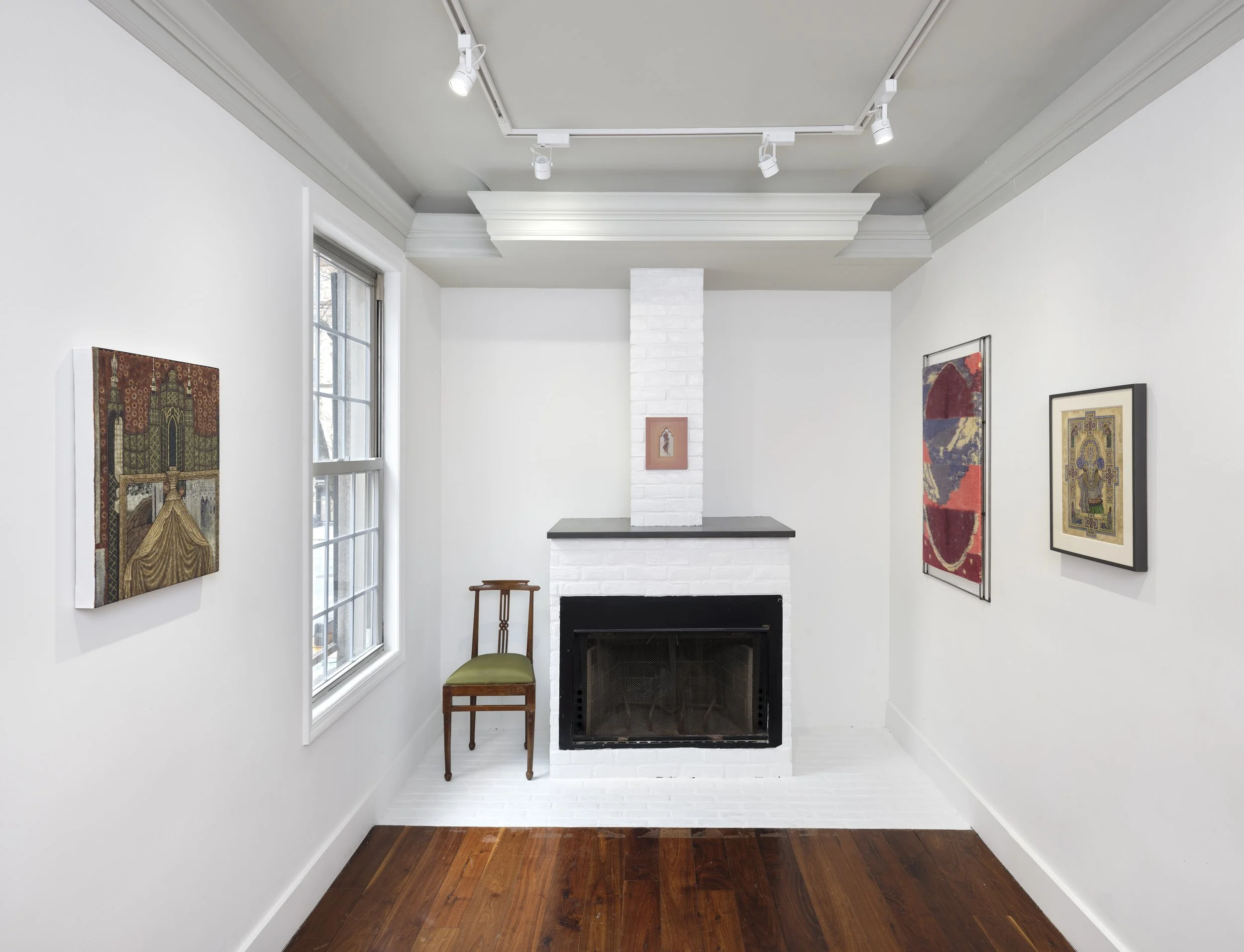
Images rarely stay still. They travel—across time, across material, across hands—carrying fragments with them, shedding others, returning altered. Vestige brings together Abbey Muza, Jennifer Carvalho, Ben Cowan, and Fabiola Jean-Louis around this sense of the image as something in motion: not fixed in the past, but continuously re-formed in the present.
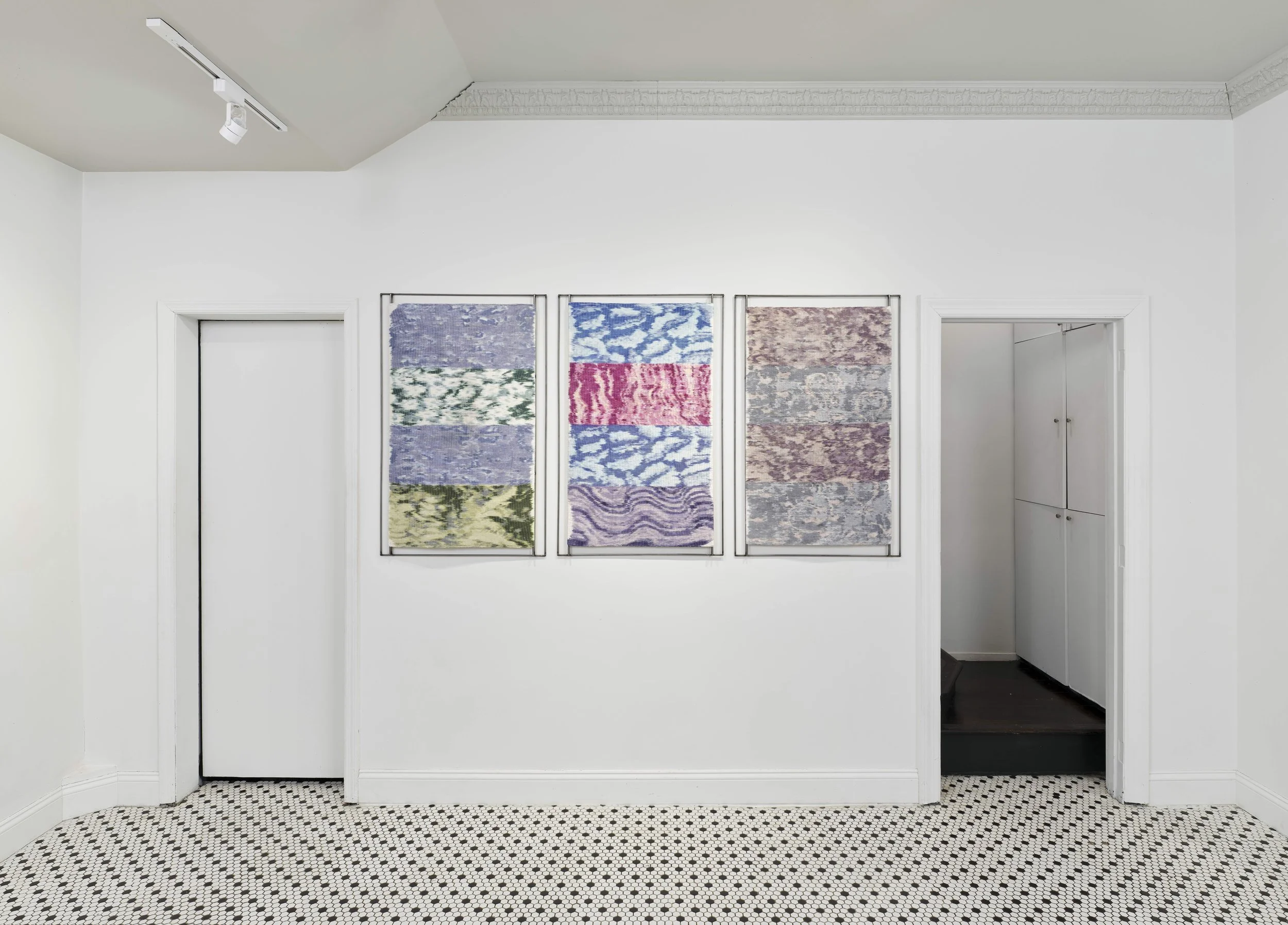
At its center, a new body of work by Abbey Muza unfolds as a kind of woven language. Drawing from medieval Apocalypse tapestries and the symbolic systems of midcentury artist Jean Lurçat—alongside contemporary strategies of encoding and signaling—their dye-printed textiles hold images as they pass between clarity and abstraction. Ferns, fire, water, stars: forms that have carried meaning across centuries reappear here as signals—of renewal, warning, environmental precarity—while also remaining open, unstable, and in flux.
Muza’s process is both deliberate and responsive. Imagery is painted onto silk threads before weaving, so that as the cloth is formed, the image shifts—softening, misaligning, or dissolving into structure. Woven in doublecloth, each textile holds two layers at once, binding surface and ground together. The works are divided into quiet, stacked frames that isolate and re-sequence fragments, as if time itself were being edited into parts. Alongside them, a series of drawings returns to these forms—reframing, tracing, or clarifying what the woven image leaves unresolved. Meaning moves between them, never fully settling.
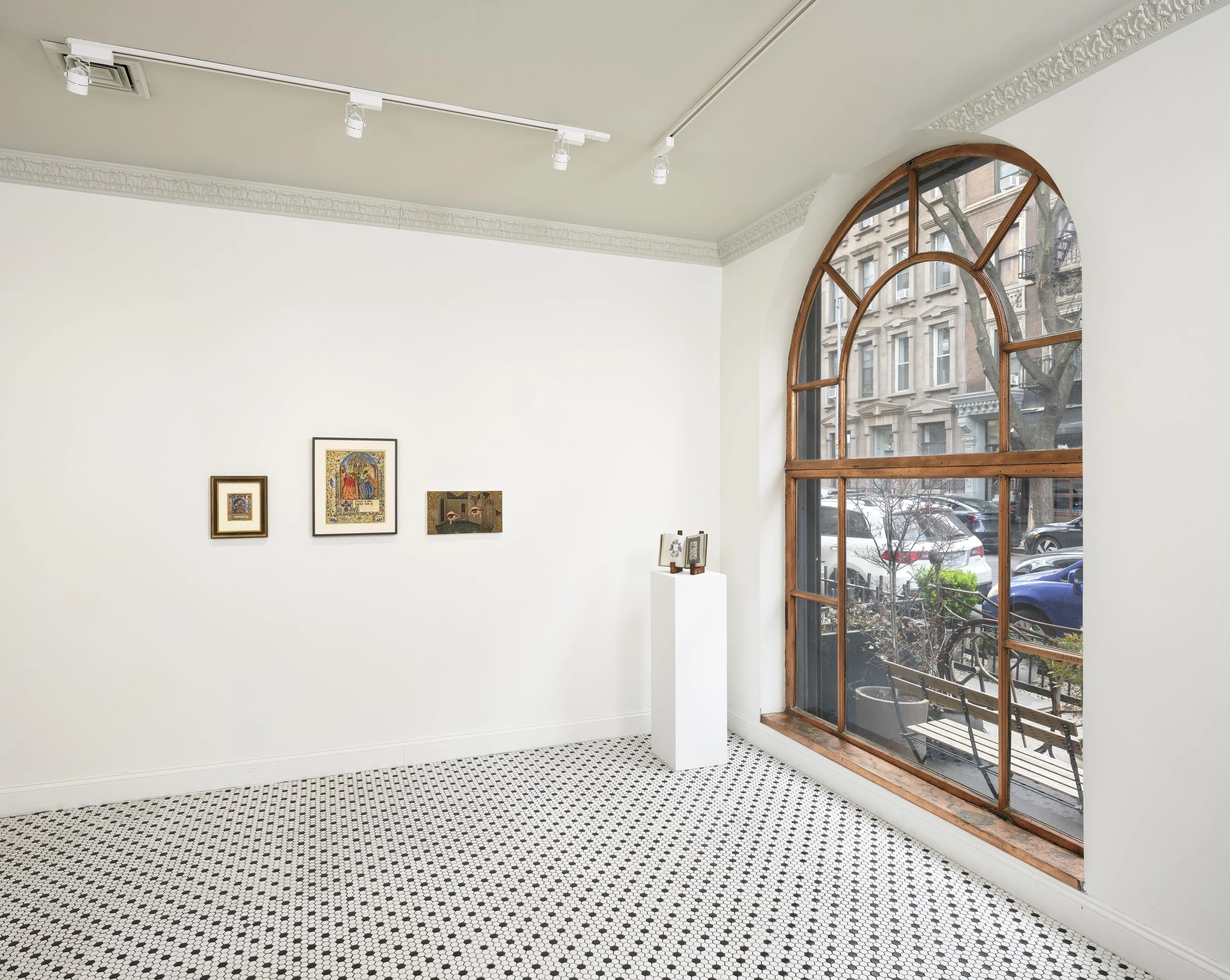
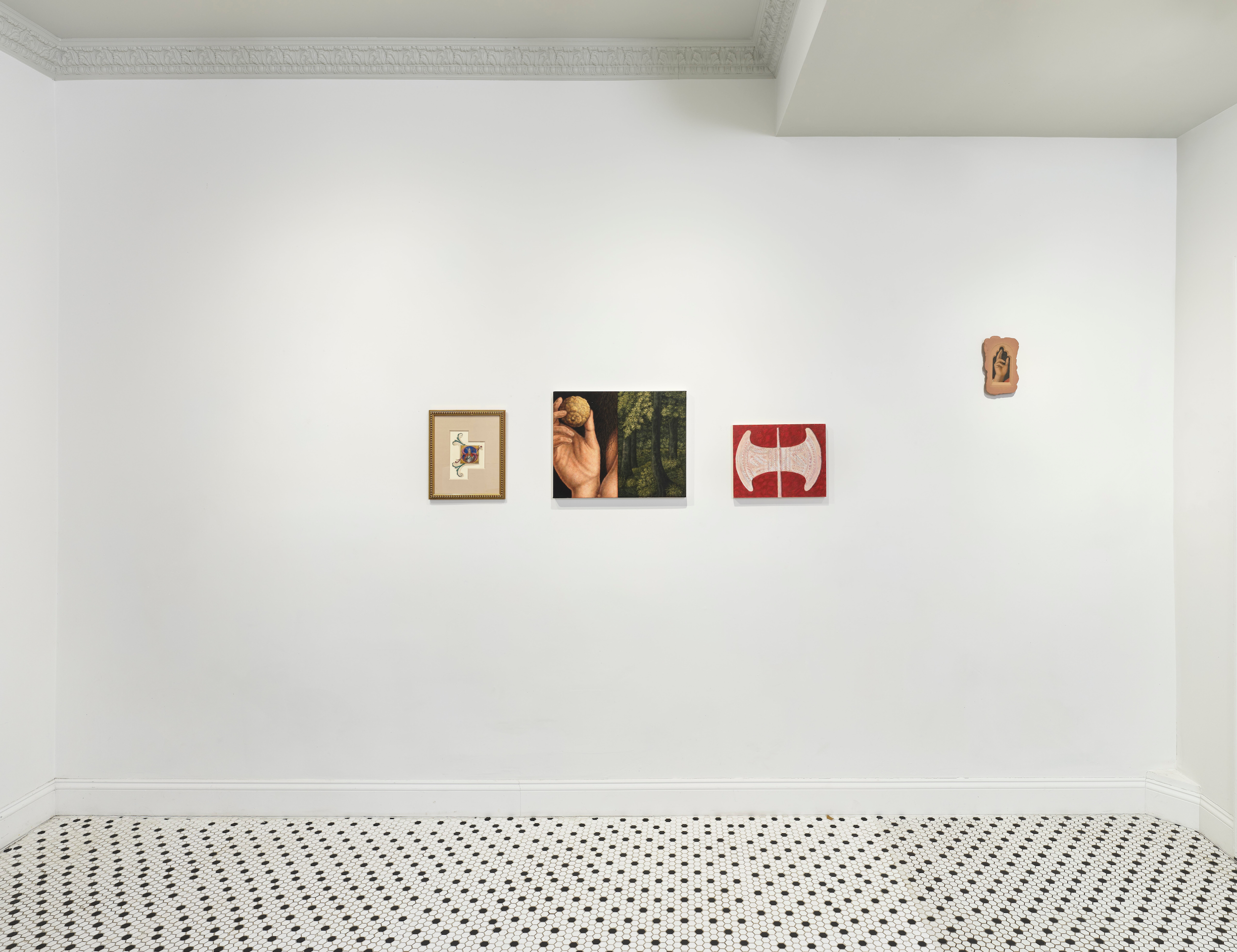
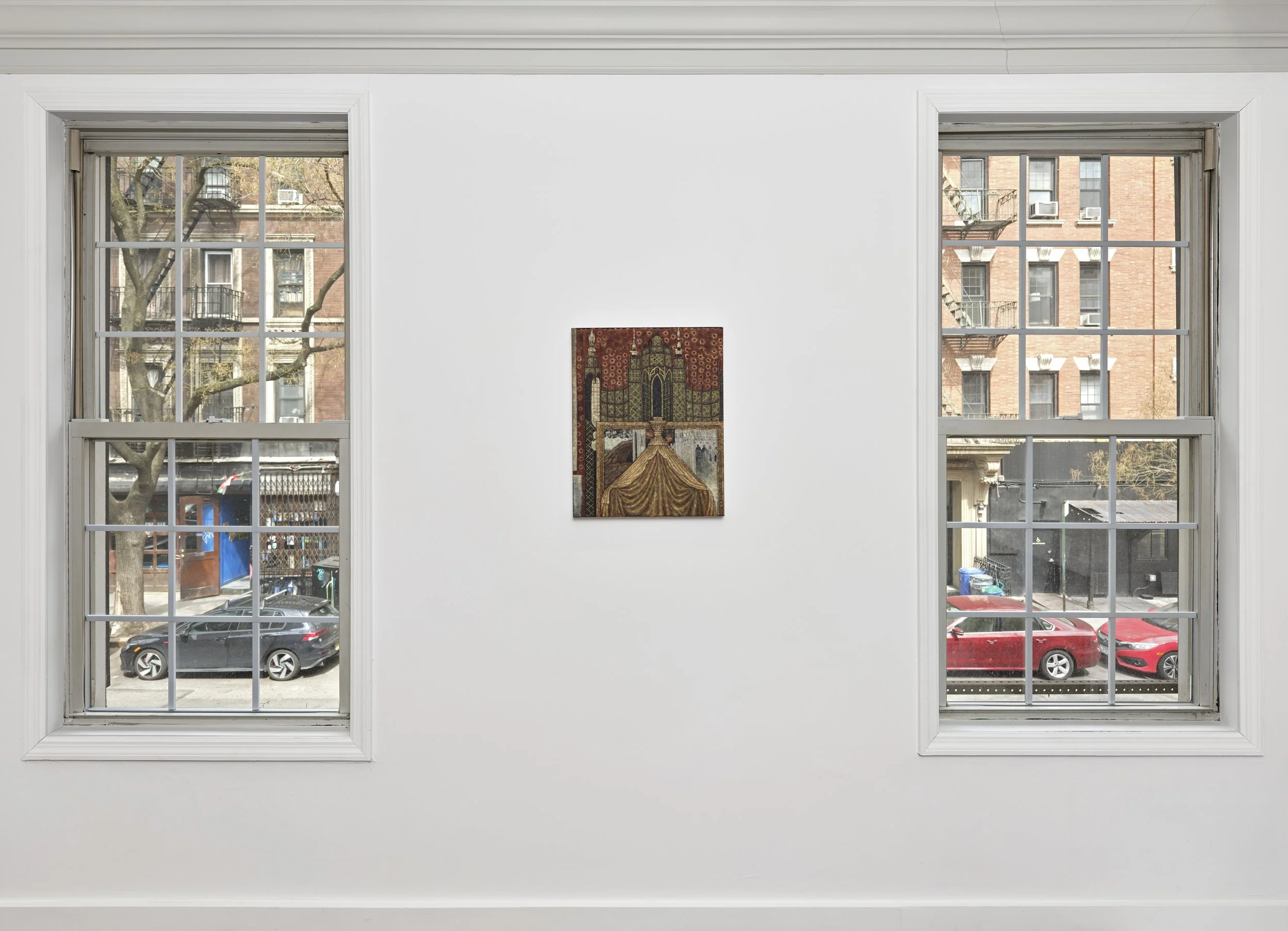
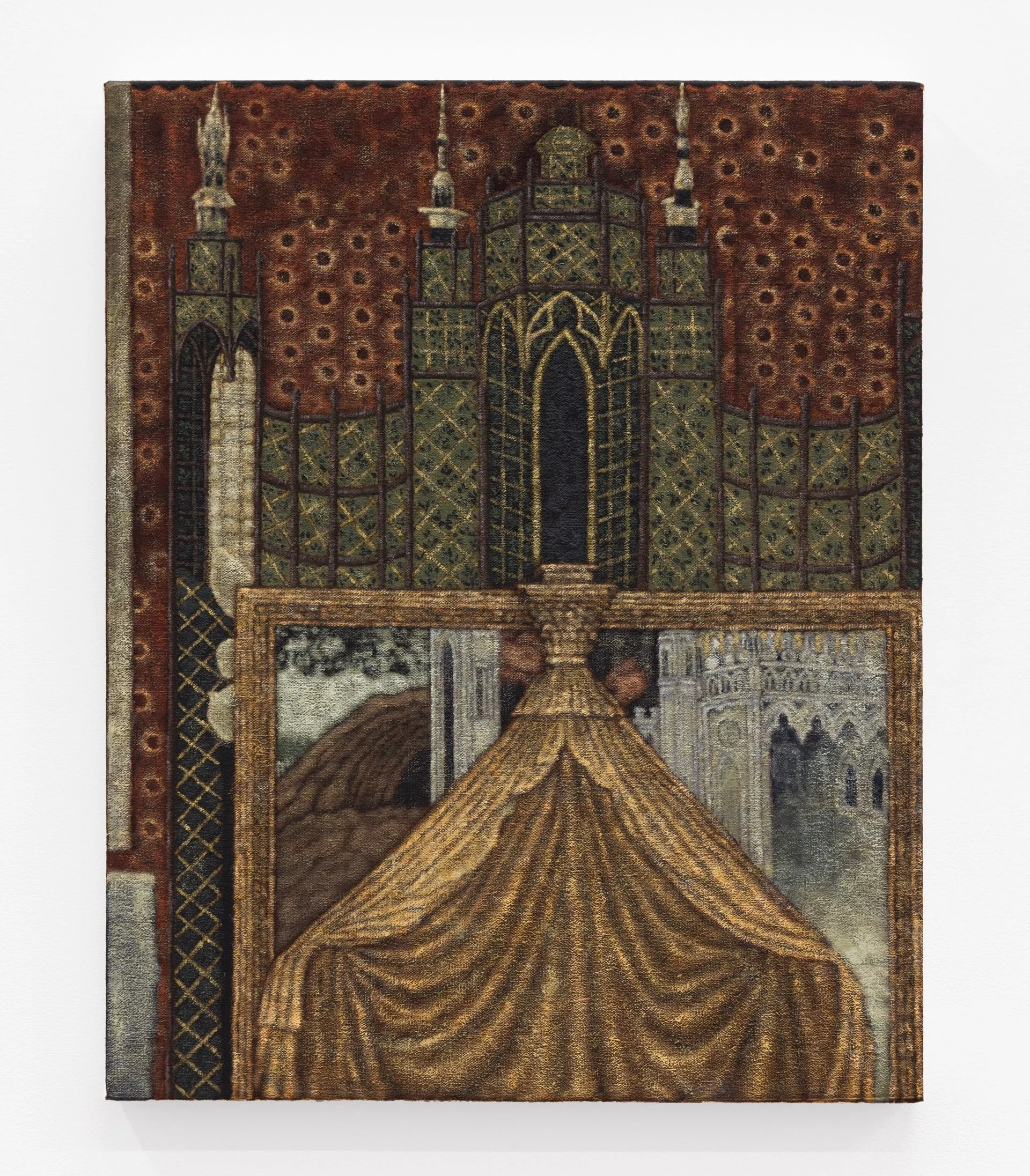
This sense of the image as something held in suspension continues throughout the exhibition. Jennifer Carvalho’s paintings gather references that feel half-remembered—Antiquity, Renaissance composition, cinematic space—layered into shallow, luminous surfaces where forms emerge and recede at once. Ben Cowan’s works compress Christian iconography into intimate, carefully framed scenes, where botanical forms and sacred figures share the same visual weight. His frames, echoing Gothic architecture, extend the image outward, shaping how it is held and encountered.
Fabiola Jean-Louis approaches the image as both revelation and concealment. Drawing from baroque portraiture, myth, and diasporic histories, her figures appear as Lwa (spirits), rendered in the visual language of medieval European devotional books. In one work, the Haitian Creole phrase “Verite a dwe kache nan je klè”—“The truth must be hidden in plain sight”—points to the survival of Haitian Vodou through its entanglement with Catholic imagery during and after enslavement. Here, images carry what they show and what they protect, holding layered histories within a single surface.
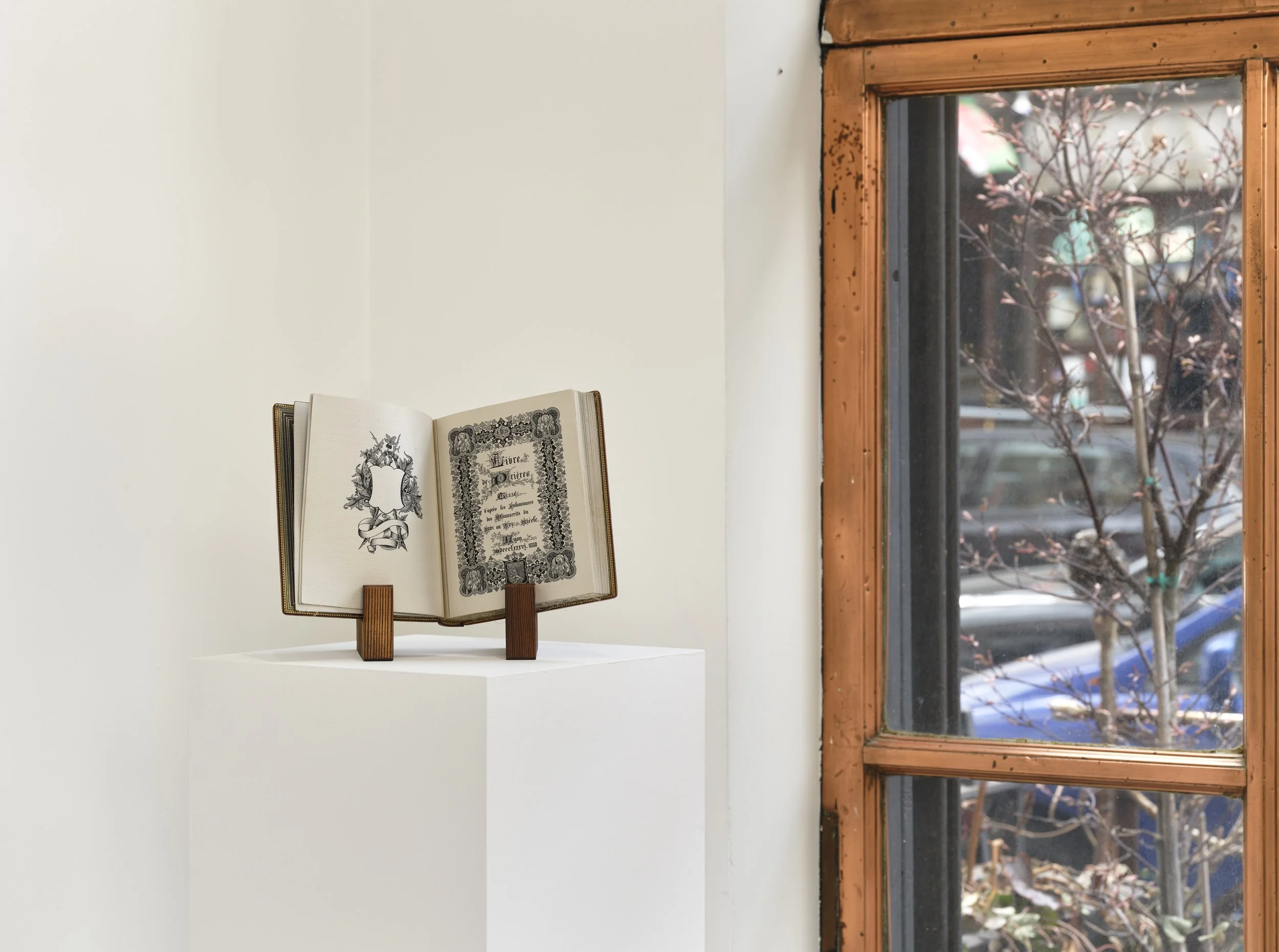
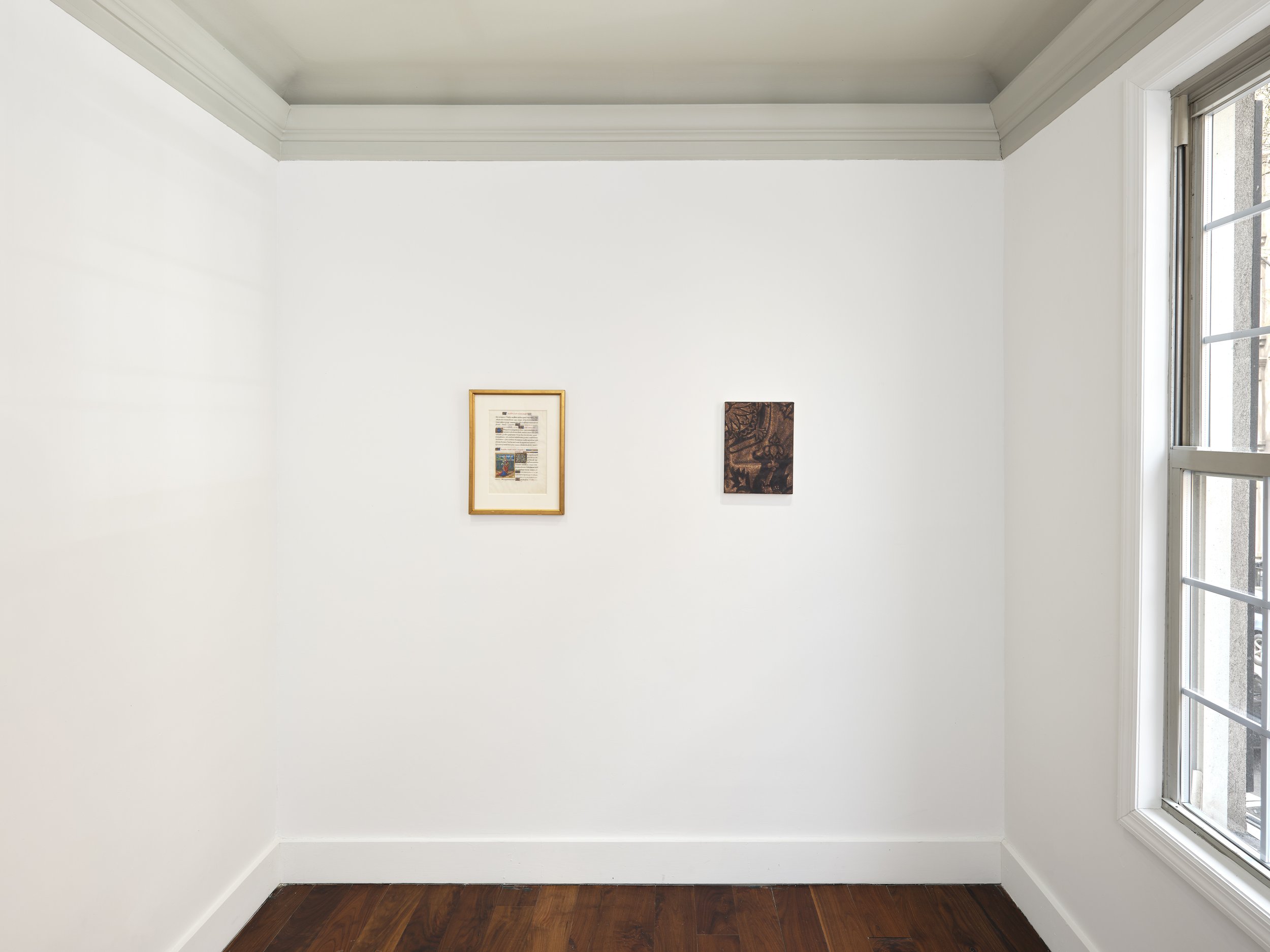
Interwoven with these works are a manuscript and a group of miniatures spanning the late medieval and Renaissance periods. Rather than serving as historical backdrop, these objects remain fully present—intricate, self-contained works that insist on their own terms of attention. A Book of Prayers woven entirely in silk (Lyon, 1889) translates the language of illumination into textile, echoing the exhibition’s concern with how images shift across medium. Nearby, a heraldic device flanked by personifications of Justice and Temperance (Austria, c. 1550–1600), a Renaissance initial depicting a blessing pope (Italy, c. 1510), and a luminous leaf of Saint Mary Magdalene (France, c. 1510–1520) each hold compressed worlds of symbolism, devotion, and patronage. Their surfaces—worked with gold, pigment, and script—reward sustained looking, unfolding slowly rather than yielding all at once.
Placed in proximity, these works do not illustrate a lineage so much as share a condition: images made to endure, to carry meaning across time, and to be continually re-encountered. They ask for attention not as relics, but as active participants in the present.
Vestige lingers in what remains: fragments, symbols, impressions that persist and shift. Not the image as it once was, but as it continues—threaded through time, held in material, and always, quietly, becoming.